


Loan Delinquency/Default Rates as Predictors/Indicators of Business Activity
Reporting/Market Focus from the April 2007 Edition of the SGS Newsletter
Troubled economic times usually lead to mounting quality problems for consumer and commercial loans. While the history of such series is limited, current measures of the health of consumer lending are showing deterioration, although the signal given is a lagging, not a leading indicator.
The data for the graphs are for loan delinquencies and charge-offs at all commercial banks, seasonally adjusted, and as published by the Federal Reserve Board.
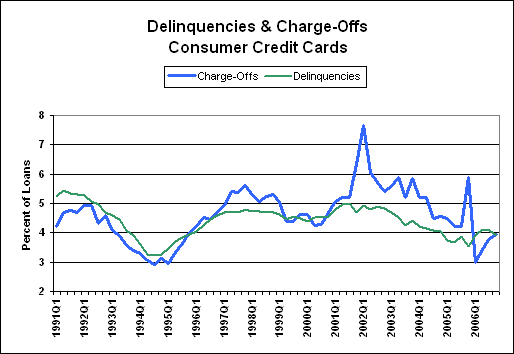
The heavier line shows spikes in credit card charge-offs tied to problems generated in the last recession and from the impact of the enactment of the 2005 bankruptcy law. Following a surge in bankruptcies designed to circumvent the new law, both delinquencies and charge-offs have been rising throughout 2006. Such indicates that roughly 7.9% of consumer credit card debt was in trouble as of year-end 2006.

Mortgages are more likely to become delinquent than to be charged off, as consumers often have had the option of selling or refinancing the property in question, in order to satisfy the mortgage. That said, mortgage delinquencies have been on the rise since the end of 2004, reaching 1.9% as of the end of 2006.
In terms of consumer liquidity, the rapidly spreading and deepening crisis reported in the popular press as to subprime and unconventional mortgages promises tightened credit standards and less liquidity for consumers. These issues, however, have yet to show meaningfully in the Fed’s data.
The Short-Term Credit Measures section will update the available loan quality numbers as they become available on a quarterly basis. First-quarter 2007 data should show a marked deterioration with the subprime problem in hand. At such time as commercial lending starts to falter, those loan-quality issues will be addressed as well.