 |
John Williams' |
Shadow Government Statistics Analysis Behind and Beyond Government Economic Reporting |
|


Alerts and UpdatesClick on the titles to view the entire article. See also: Newsletters and All Commentaries |
Market/Reporting Focus | Gillespie Research Archives |
|
Subscribers Only |
Open Content Available to all of our readers.
Withheld Income and Payroll Taxes - Update February, 17th, 2012
Please see our introductory pages on payroll tax receipts for some background information on this data series. Analyzing the Potential for Tax Receipts Growth in 2012 Note: In all that follows, "Tax Receipts" and "Tax Deposits" refer to payments deposited by employers on the basis of payroll activity, and received by the US Treasury . The deposits […]
No. 365: March Home Sales, Durable Goods Orders April, 27th, 2011 • Pending Benchmarks to Retail Sales and Durable Goods Orders Should Show Economy to Have Been Weaker
• Home Sales Remain Troubled
No. 354: GDP Revision, Durable Goods Orders, Home Sales, Tax Receipts, Political Crises February, 25th, 2011 • Safe-Haven Flight from Mounting Political Turmoil in North Africa and Mid-East Favors Precious Metals and Swiss Franc over U.S. Dollar
• Payroll-Tax-Deposit Series to Offer New Economic and Fiscal Insights • 4th-Quarter GDP Growth Revised Lower But Quality Issues Continue • Home Sales Remain Troubled
No. 346: December Housing Starts January, 19th, 2011 • Housing Starts Collapse Accelerates Anew, Down an Annualized 30% in 4th- versus 3rd-Quarter
No. 328 September Employment and Unemployment, October, 8th, 2010 • Outright Contraction in September Payrolls Net of Temporary Census Workers
• Current Payroll Level Overstated by Roughly 550,000, Based on Announced Benchmark Revision • Broad Unemployment Rates Soar • September Unemployment Rates: U.3 at 9.6%, U.6 at 17.1%, SGS at 22.5% • M3 Annual Decline Narrows
No. 327: Second-Quarter GDP Revision, September Employment Outlook September, 30th, 2010 • 2nd-Quarter GDP at 1.7%, GDI at 1.3%
• Census Jobs Reduce September Payrolls by Roughly 78,000 • New Online Help-Wanted Advertising Drops 2.6%
No. 326: Double-Dip, Housing, Durable Goods September, 26th, 2010 • Officially It Will Be a Double-Dip Recession
• Third-Quarter Contraction Suggested by Housing and Durable Goods Orders Data • Stock Market Hypesters Grasping at Straws • Gold Strength and Dollar Weakness Signal Problems Ahead
No. 325 CPI, PPI, Production, Household Income September, 17th, 2010 • August Annual Consumer Inflation: 1.1% (CPI-U), 8.5% (SGS)
• Production Down Except for Boost from Prior-Period Revisions • Households Face Mounting Financial Stress • Income Variance at Record High
No. 324: August Retail Sales September, 14th, 2010 • Boosted by Downside Revisions to July Retail Sales, August’s 0.4% Gain Still Was Not Statistically Meaningful
• Net of Higher Food and Gas Prices, “Core” Retail Sales Increased Less Than 0.1%
No. 323: Updated Outlook on Economy, Systemic Stability and Financial Markets September, 13th, 2010 • Protracted Economic Downturn Re-Intensifies
• Systemic Stability: “Tap-Dancing on a Land Mine” • Risks of U.S. Dollar Instability and Systemic-Salvation Efforts Pose Severe Inflation Threat
No. 322: July Trade Deficit September, 9th, 2010 • July Trade Deficit Suggests Minor Impact for Third-Quarter GDP
• Year-Ago Reporting Games May Affect Upcoming Data
No. 321: August Employment and Unemployment September, 3rd, 2010 • August Unemployment: U.3 = 9.6%, U.6 = 16.7%, SGS = 22.0%
• August Payrolls Fall 54,000, Gain 60,000 Ex-Census Workers • Better-Than-Expected Payroll Changes Were Not Statistically Meaningful
No. 320: Updated August Labor Market Outlook September, 2nd, 2010 • August Payroll and Unemployment Reporting Likely to Disappoint Expectations
No. 319: Second-Quarter GDP Revision August, 27th, 2010 • Second-Quarter GDP Revised to 1.6% from 2.4%
• Deteriorating Economic Data Eventually Should Disrupt U.S. Financial Markets
No. 318: July Home Sales, Durable Goods Orders August, 25th, 2010 • Housing Market Stress Deepens Irrespective of Wild Reporting
• Durable Goods Orders Almost Flat Despite Aircraft Boost • Census Payrolls Down 116,000 in August
No. 317: July Housing Starts, Production and PPI August, 17th, 2010 • July Housing Starts Below Initial June Reporting, Suggestive of Third-Quarter GDP Contraction
• July Industrial Production Boosted by Seasonal Disruptions • Annual PPI Inflation Rose to 4.2% in July
No. 316: CPI Inflation, Retail Sales, Trade and Liquidity August, 15th, 2010 • July Annual Consumer Inflation: 1.2% (CPI-U), 8.6% (SGS)
• Retail Sales Hint at Third-Quarter GDP Contraction • Widening Trade Deficit Will Dampen GDP in Revision • Economic and Liquidity Crises Continue
No. 315: Updated Outlook, July Employment and Unemployment August, 6th, 2010 • Re-Intensifying Depression Foreshadows Great Crises
• July Payrolls Fell 131,000, Gained 12,000 Ex-Census Layoffs • June’s 100,000 Ex-Census Payroll Gain Revised to 4,000 • July Employment Dropped by 159,000 (Household Survey) • July Unemployment: 9.5% (U.3), 16.5% (U.6), 21.7% (SGS)
No. 314: Updated July Employment Outlook August, 5th, 2010 • Labor Conditions Likely Worse than Consensus
• Timing for Next Phase of Crises Coming into Better Focus
No. 313: Second-Quarter GDP and Revisions July, 30th, 2010 • Worst Economic Downturn Since World War II Just Got Worse
• Bulk of First-Half GDP Growth Due to Inventories, Setting Up Likely Third-Quarter Contraction • Lingering Market Hopes for Recovery Should Fade Quickly
No. 312: Durable Goods, Home Sales, Upcoming GDP Revisions July, 28th, 2010 • Restated Downturn Should Be More Severe
• Nonsense Home-Sales Reporting • Roughly 144,000 Census Jobs Lost in July
No. 311: June Housing Starts July, 20th, 2010
 • Housing Starts Show Bottoming-Bouncing, Approaching Renewed Decline
No. 310: Inflation and Production July, 16th, 2010 • Annual Consumer Inflation: 1.1% (CPI-U), 8.4% (SGS)
• Lower Gasoline Tempered June Inflation, but Watch Out for July’s Data • June Industrial Production Flattened Out
No. 309: Retail Sales and Trade Deficit July, 14th, 2010 • Retail Sales Signaled Renewed Business Downturn, Again, in June
• Sales Falling at Roughly 7% Annualized Pace, Net of Inflation • Trade Deficit’s Merchandise Component Should Sap 1.0% from GDP Growth
No. 308: Economic and Liquidity Update July, 9th, 2010 • Shills for Wall Street Are Busy
• Broad Liquidity Measures Remain Abysmal • Unemployment Trends Show Severity of the Depression
No. 307: June Employment and Unemployment, Liquidity Update July, 2nd, 2010 • June Payrolls Jobs Fell 125,000, Gained 100,000 Net of Census Layoffs
• June Household-Survey Employment Dropped by 301,000 • June Unemployment: 9.5% (U.3), 16.5% (U.6), 21.6% (SGS) • Payroll and Unemployment Changes Were Statistically Indistinguishable from Zero
No. 306: Update on Jobs Outlook for June July, 1st, 2010 • June Census Jobs Loss Revised to 230,000
• Another 94,000 Lost in Subsequent Week • Employment Reporting Likely to Disappoint Expectations
No. 305: Economic Update, GDP Revision, Durable Goods June, 25th, 2010 • 69% of First-Quarter GDP Growth Was Inventory Build-Up, Annualized Final Sales Growth Slowed to 0.86%
• Unusually Large Late-GDP Changes in Advance of Next Month’s Annual GDP Revisions • Softer than Advertised “Recovery” Data Should Accompany Onset of Renewed Downturn
No. 304: Census Jobs Loss, Home Sales June, 23rd, 2010 • Census Firings Cost June Payrolls Roughly 240,000 Jobs
• May New Home Sales Down 40.5% in Month after Major Downside Revisions to Earlier Reporting
No. 303: Inflation Update, Housing and Production June, 17th, 2010
 • May Annual Consumer Inflation: 2.0% (CPI-U), 9.2% (SGS) • Seasonal Factors Depressing Monthly CPI Reverse in June and July • Early Signs Continue of Intensifying Business Contraction
No. 302: Retail Sales, Trade Deficit June, 11th, 2010 • Ski-Jump-Shaped Depression
• May Retail Sales Drop: Tentative Confirmation of Intensified Business Downturn • April Trade Deficit: A Negative for Second-Quarter GDP
No. 301: Money Supply Update June, 7th, 2010 • 5.9% M3 Annual Decline Deepest Since Early-1930s Banking Crisis
• Post-World War II Record Drop in Inflation-Adjusted M3 Signals Intensifying Business Contraction • Renewed Recession Will Set Stage for U.S. Solvency Crisis and Severe Inflation Threat
No. 300: May Employment and Unemployment June, 4th, 2010 • May Nonfarm Payrolls Rose 20,000 Net of 411,000 Temporary Census Hires and Fell by 31,000 after Revisions and Birth-Death Model Shenanigans
• May Household-Survey Employment Fell by 35,000 Irrespective of Census Hires • Unemployment Rates Were Artificially Low Due to Census Effects: 9.7% (U.3), 16.9% (U.6), 21.7% (SGS) • M3 Signal for Double-Dip Downturn Intensifies
No. 299: Employment Report Outlook and Some Updates June, 3rd, 2010 • 420,000 May Census Hires Assure “Strong” Jobs Report
• Consensus Estimates May Be Disappointed • Continued Data Distortions Generated by Severity of the Economic Downturn
No. 298: GDP and New Orders for Durable Goods Revisions May, 27th, 2010 • Gross Domestic Income Continues Showing Slower Growth than Gross Domestic Product
• Massive Revisions to Durable Goods Orders • Employment Set to Retrench Anew (Net of Census Impact)
No. 296: Retail Sales, Production and the Deficits May, 14th, 2010 • Retail Gain Statistically Indistinguishable from Contraction
• Revisions Enhance Production Reporting • Trade Deficit Remains Economic Negative • Budget Deficit Widens Despite Gimmicks
No. 294: First-Quarter GDP, Mounting Systemic Risks April, 30th, 2010 • GDP Growth Lacks Sustainability
• Economic and Systemic Risks Intensify
No. 293: Inflation and Gold, March PPI, Durable Goods, Home Sales April, 23rd, 2010 • PPI Showed Broadening Inflation Base
• Durable Goods Orders Suggest Bottom-Bouncing • Home Sales Remain in Serious Trouble
No. 292: March Housing Starts, Industrial Production April, 16th, 2010 • Housing Still Bottom-Bouncing
• Production Set to Soften
No. 291: March CPI, Retail Sales, Trade April, 14th, 2010
 • Annual Inflation: 2.3% (CPI-U), 9.5% (SGS) • “Strong” Retail Sales Should Prove Fleeting • Trade Deficit Widened / Recession Is Not Over
No. 290: Updated Liquidity and Economic Outlook April, 9th, 2010 • Mounting Liquidity Squeeze Constrains Broad Business Activity
No. 289: March Employment and Unemployment, Liquidity Crisis April, 2nd, 2010 • March Unemployment Rose to 9.8% Net of Census Hiring
• Official Reporting: BLS U-3 Held at 9.7%, U-6 Rose to 16.9%, SGS Rose to 21.7% • March Employment Gain of 162,000 Was 114,000 Net of Temporary Census Hiring • Economic-Deterioration Signal Intensifies
No. 288: Healthcare, GDP, Durables, Home Sales March, 25th, 2010 • Government’s Healthcare Takeover Will Depress Economy, Exacerbate Deficit and Inflation Woes
• Downside Revisions Loom for 2009 GDP • Durable Goods Orders Gains Are Long-Term not Near-Term • Home Sales Heavily Influenced by Foreclosures
No. 287: February CPI and PPI March, 18th, 2010 • February’s Annual Inflation: CPI-U (2.1%), SGS (9.4%)
• Oil Price Gyrations Contained February Inflation but Promise March Spike
No. 286: February Production and Housing March, 16th, 2010 • Bottom-Bouncing Continues
• Fault Lines in “Recovery” Begin to Show
No. 285: Outlook Update, Retail Sales, Trade Deficit March, 12th, 2010 • Retail Sales Revisions Boosted January Headline Gain but Reduced Reported Sales Levels
• Sales Still Bottom-Bouncing Net of Inflation • January Trade Deficit Was GDP-Neutral • Fleeting Census Jobs Creation Will Have Offsetting Losses
No. 284: February Employment and Unemployment March, 5th, 2010 • Payroll Drop of 36,000 was 51,000 Net of Census Hiring
• Broader February Unemployment Measures Rose: U.6 at 16.8% (up 0.3%), SGS at 21.6% (up 0.4%) • Economy Remains Headed into Deepening Downturn
No. 283: Updated February Employment Outlook March, 4th, 2010 • Don’t Blame the Weather
No. 282: Federal Government 2009 GAAP-Accounting March, 1st, 2010 • 2009 GAAP-Deficit Narrowed to $4.3 Trillion
• Total GAAP-Based Obligations of $71 Trillion at Five-Times GDP Level • Accounting for Government Bailouts Showed TARP Profit
No. 281: General Update, GDP, Durable Goods February, 26th, 2010
 • 69% of 4th-Quarter’s 5.9% “Boom” Due to Nonfarm Inventories • Economic and Financial Crises Are Not Over • Fed Still Panicking Despite Happy Talk
No. 280: January CPI, PPI, Housing Starts, Production February, 19th, 2010 • Annual Inflation 2.6% (CPI-U), 3.3% (CPI-W), 9.8% (SGS)
• Quarterly Inflation Shifted from Fourth- to Second-Quarter 2009 • Economy Keeps Bottom-Bouncing as Intensified Contraction Nears
No. 279: January Retail Sales February, 12th, 2010 • January Retail Sales Gain Reflected Inflation and Seasonals
No. 278: Annual and December Trade Deficit February, 10th, 2010 • December Trade Deficit Should Knock 1.1 Percentages Points off 4th-Quarter GDP Growth
• Storm-Delayed Economic Reports
No. 277: Liquidity Crisis Update, Money Supply February, 8th, 2010 • Plunge in Broad Liquidity Continues
• Intensified Business Downturn Looms • Monetary Base Surges to Near-Record High • U.S. Economic and Financial Woes Remain Worse Than Rest of World
No. 276: Reporting Focus: January Employment and Benchmark Revision February, 5th, 2010
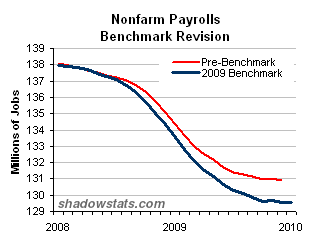 • 1.36 Million Jobs Knocked off December Payrolls; Depression’s Job Loss Increased by 19% • January Unemployment: 16.5% (U-6), 21.2% (SGS) • Serious Jobs and Unemployment Deterioration in Months Ahead
No. 275: Employment Outlook Update, New Site Feature February, 3rd, 2010 • Revisions Allow for Unusual January Jobs Reporting
• Meaningful Payroll and Unemployment Deterioration Ahead • New Site Feature: Content-Index Navigation Tool
No. 274: State of the Real World, Fourth-Quarter GDP January, 29th, 2010
 • 4th-Quarter GDP “Boom” Sets Stage for Double-Dip • 2009 Downturn Worst Since Great Depression • Watch-Out for 2010 Federal Deficit! • Durable Goods Orders Keep Bottom-Bouncing
No. 273: December PPI, Housing Starts, GDP Outlook January, 20th, 2010 • Annual PPI Inflation Hits 4.4%
• Housing Starts Keep Bottom-Bouncing • Strong 4th Quarter GDP Report Would Set Base for Double-Dip Downturn
No. 272: December CPI, Industrial Production January, 15th, 2010
 • December Annual Inflation 2.7% (CPI-U), 9.7% (SGS) • Unusually Cold Weather Boosted December Production • Fed Shows Recession Ended Mid-2009, but Double-Dip Is in Place
No. 271: December Retail Sales January, 14th, 2010 • Bad Seasonals Continue to Bloat Reported Retail Sales
• 2009 Holiday Season Was a Bust, both Before and After Inflation Adjustment, Using Normal Seasonal Factors
No. 270: December Employment Report January, 8th, 2010 • Broader December Unemployment Rates Notched Higher, U-6 at 17.3%, SGS at 21.9%
• December Household Employment Reported Down by 589,000 • December Payroll Employment Probably Shrank by About 500,000
No. 269: Distorted Seasonals, Employment Outlook January, 6th, 2010 • Depression-Induced Seasonal Factor Distortions Alter Recession’s Impact in Key Reporting
• Bad Seasonals Could Spike December Payrolls
No. 268: Double-Dip in Place December, 30th, 2009 • Tumbling Real M3 Promises Intensified Depression
• Major Double-Dip Downturn Should Be Obvious by Mid-Year 2010
No. 267: Third-Quarter GDP Revision December, 22nd, 2009
 • GDP Growth Still Overstated • Economic and Liquidity Crises Face New Down-Legs
No. 266: November CPI, PPI, Production and Housing December, 16th, 2009 • Bad Seasonals Turn Data Topsy-Turvy
• Annual CPI-U Inflation Jumps to 1.8% (SGS 8.8%) • November versus October Annual Inflation Swings Positive by 2.0% for the CPI, 4.3% for the PPI • November Annual Real Retail Sales Were Unchanged • November Housing “Gain” Statistically Not Different from Zero
No. 265: November Retail Sales, Inflation Surge, Data Distortions December, 13th, 2009 • Renewed Caution on Depression-Warped Data
• November Retail Sales Annual Gain of 1.9% Reflected Return of Inflation • November Annual CPI Inflation Should Jump by About 2%
No. 264: November Employment, Monetary Base December, 4th, 2009
 • Employment and Unemployment Not Improving, Despite Distortions from Seasonal Factors and Revisions • Unemployment Rate U.3 at 10.0% (SGS 21.8%) • Fed Boosts Monetary Base Anew
Hyperinflation Special Report (Update 2010) December, 2nd, 2009 • Economy and Financial System Face Eventual Great Collapse
• Government and Fed Actions Have Narrowed Hyperinflationary Great Depression Timing to Next Five Years • High Risk of Ultimate Dollar Crisis Unfolding in Year Ahead
No. 262: U.S. GAAP Accounting Delayed, Employment Report Outlook December, 2nd, 2009 • Treasury Delays 2009 GAAP Statement for Two Months
• Employment Conditions Remain Bleak
No. 261: Third-Quarter GDP Revision November, 24th, 2009 • Lower GDP Growth Still Heavily Overstated
• 3rd-Quarter GDP at 2.8%, GDI at 2.0% • “Reduced” Inflation Bloated Reported Activity • Revised Salaries and Wages Soared as Employment Collapsed?
No. 260: Monetary Base and Contracting M3 November, 22nd, 2009 • Monetary Base Surge Stalls Near Record High
• Annual M3 Growth Could Turn Negative in December • Continuing Liquidity Contraction Foreshadows Deepening Economic Downturn
No. 259 General Outlook, October CPI, PPI, Production, Housing November, 18th, 2009 • Annual October CPI-U Inflation -0.18% (+7.1% SGS)
• Formal Deflation Has Run Its Course • Bottom-Bouncing Continued in Real Retail Sales, Housing and Production
No. 258: October Retail Sales November, 16th, 2009 • Reported October Retail Sales Boosted by Revisions and Inflation
• Third-Quarter GDP Growth May See Some Downward Revision
No. 257: Updated Trade Deficit, Credit, CPI Outlook November, 13th, 2009 • Jump in September Trade Deficit Places Downside Pressure on GDP Revision
• Annual CPI Inflation to Surge, Turning Positive by November • Credit Squeeze Intensifies
No. 256: Updated General Outlook, Employment/Unemployment, Money Supply November, 6th, 2009 • Annual Payroll Loss Rivals End of World War II Production Shutdown
• Unemployment Jumps to 10.2% (22.1% SGS) • Systemic Liquidity Problems Still Intensifying • Fed Continues to Explode Monetary Base
No. 255: Brief Update - Friday’s Employment/Unemployment Release November, 4th, 2009 • Employment Situation Continues to Deteriorate
No. 254: Updated Economic Outlook, GDP, Durable Goods, Home Sales October, 29th, 2009 • Recession Is Not Over / Quarterly GDP Growth Is Not Sustainable, with 92% of Growth in Nonrecurring Factors
• Annual GDP Down 2.3% (5.7% SGS) • 4th-Quarter GDP Should Resume Quarter-to-Quarter Decline • Durable Goods Orders at 1997 Level • Help-Wanted Advertising at New 58-Year Low
No. 253: GDP Outlook, Surging Monetary Base October, 27th, 2009 • Fed Pushes Monetary Base to Record High
• Recession Not Over Despite a Positive GDP Quarter
No. 252: General Outlook, Housing, Production and PPI October, 20th, 2009
 • Key Indicators Continue Bottom-Bouncing at Low-Level Plateaus of Business Activity • 10 Years of Production Growth Has Evaporated, All Post-World War II Housing Growth Is Gone • Positive Quarterly 3rd-Qtr GDP Growth Would Not Mean Recession’s End • PPI Annual Inflation Should Turn Positive by Year-End
No. 251: General Outlook, CPI and Retail Sales October, 15th, 2009 • September Annual Inflation -1.3% (CPI-U), 6.1% (SGS)
• CPI-U Inflation Spike Due by Year-End • No Recovery: September Real Retail Sales Continued Bottom-Bouncing at Low-Level Plateau • 10 Years of Retail Sales Growth Gone
No. 250: General Outlook and Trade Data Update October, 9th, 2009 • Bernanke Pushes Monetary-Base Panic Button
• M3 Headed for Still Weaker Growth • Substance Behind U.S. Dollar Concerns and Gold Rally • FY2009 Government Obligations Likely Hit $75 Trillion • Trade Deterioration Should Be Minor Drag on 3q09 GDP • Economic and Solvency Crises Continue, Inflation Risk Ahead
Flash Update October, 2nd, 2009
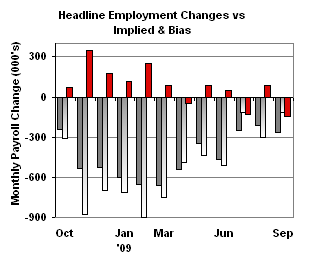 • BLS Revision Nightmare: March 2009 Payrolls Overstated by 824,000 • Birth-Death Model Falsely Boosting Jobs Reporting in Recession Environment • Monthly Jobs Loss of 263,000 (Payroll Survey) versus Monthly Employment Decline of 710,000 (Household Survey) • September Unemployment Rates: U.3 = 9.8%, U.6 = 17.0%, SGS = 21.4%
Flash Update September, 30th, 2009 • 2nd-Q GDP Decline Narrowed in Revision (to -0.8% from -1.0%), but GNP and GDI Contractions Deepened (GNP to -1.0% from -0.8%, GDI to -2.6% from -2.1%)
• Annual GDP Contraction Remained Worst of Post-World War II Era
Flash Update September, 25th, 2009 • Economic and Liquidity Crises Remain Ongoing
• No Recovery in New Orders or Housing • Fed Pushes Monetary Base to Record High
Flash Update September, 16th, 2009 • U.S. Recession Is Not Over
• With Clunker Rebates in New Car Prices, Monthly CPI Gained 0.7% Instead of 0.4% • CPI-U Annual Inflation -1.5% (SGS +6.0%) • Industrial Production Boosted by Clunkers and Weather
Flash Update September, 15th, 2009 • 2.7% Retail Sales Jump Reflected Inflation and One-Time Clunker Spikes
• “Core” Retail Sales Up 2.0% (0.2% Net of Clunkers) • Wholesale Inflation Soared with Oil
Flash Update September, 12th, 2009 • Annual Broad Money Growth Slowed Sharply in August
• Fed’s Beige Book Generally Indicated Severe Bottom Bouncing • Irregular Cash-for-Clunkers Impact in Pending Economic and Inflation Numbers
Flash Update September, 10th, 2009 • Widening July Trade Deficit Played Some Catch-Up
• Structural Limitations: Consumer Unable to Support or Sustain Economic Growth
Flash Update September, 4th, 2009 • Economic Downturn Deepens Anew
• Annual Payroll Decline Is Worst of Downturn • Monthly Payroll Decline Was 300,000, Net of Renewed Seasonal Factor Games • Broad Unemployment Jumped 0.5% to 16.8% (U-6), 21.1% (SGS)
Alert September, 2nd, 2009 • Something Brewing in Systemic Solvency Crisis?
• No Substance to “Economic Recovery” • U.S. Taxpayer-Subsidized Deflation • Worse-Than-Expected Labor Statistics?
Flash Update August, 27th, 2009 • Gross Domestic Income Down 2.1% in 2nd Quarter, with Record 4.6% Annual Decline
• Housing and Durable Goods Not Signaling Recovery
Flash Update August, 18th, 2009 • July Housing Starts Showed Ongoing Depression
• Volatile PPI Reflected Unusual Seasonal Factors • Journalists Too Overworked to Handle Poverty Report?
Flash Update August, 14th, 2009 • Official July CPI-U Annual Inflation of -2.1% (SGS +5.4%)
• Monthly and Annual CPI Should Jump in August • Net of Bad Auto Seasonals, July Industrial Production Contracted
Flash Update August, 13th, 2009 • July Retail Sales Continued Historic Bottom-Bouncing
• Monthly “Core” Retail Sales Gained 0.22% versus Aggregate 0.05% Contraction • 12-Month “Official” Federal Deficit Topped $1.3 Trillion, Gross Federal Debt Up $2.1 Trillion
Flash Update August, 7th, 2009 • Depression-Warped Seasonal Factors Improved Reporting of July Employment and Unemployment, Purchasing Managers Manufacturing
• Watch Out for Sharply Negative Economic Surprises Next Month • Broad Money Growth Continues Signaling Ongoing Crises
Flash Update July, 31st, 2009 • GDP Shows Most Severe Recession Since Great Depression
• Second-Quarter GDP Annual Contraction Was Worst Ever • Recession Is Not Ending • Annual Durable Goods Plunge Continued In Great Depression Territory • Broad Money Growth Still Slowing • Unemployment Skew Next Week?
Flash Update July, 28th, 2009
 • Depression Data Distortions Fuel Recovery Mania • Statistically Insignificant Monthly Changes amidst Severe Bottom Bouncing • Foreclosures Warp New and Existing Home Sales • Shy of a Political Fix, Second-Quarter GDP Consensus Is Too Optimistic
Flash Update July, 15th, 2009 • Inflation Accelerates (Annualized June Rate of 9.3%)
• June CPI-U Annual Deflation of 1.4% versus SGS-Alternate Estimate of 6.1% Inflation • Quarterly Production and Real Retail Sales Contractions Confirm Ongoing Recession
Flash Update July, 14th, 2009 • June Retail Sales Gain Due to Rising Inflation
• “Core” Monthly Retail Sales Rose 0.26% versus Total 0.65% • PPI Inflation Surge Reflects More Than Oil Prices, Annual Change Reverses Direction of 10-Month Downtrend • Gross Federal Debt Up More Than $2 Trillion Year-to-Year
Flash Update July, 10th, 2009 • No Abatement in U.S. Economic or Solvency Crises
• May Trade Data Suggest U.S. Business Activity Suffering More Than Rest of World • Broad Money Growth Slows Anew • New Stimulus and Bailout Packages Likely
Flash Update July, 2nd, 2009
 • June Jobs Loss Was 513,000 Net of Concurrent Seasonal Factor Bias, Likely Topped 700,000 with Birth-Death Machinations • Payroll Employment Growth Overstatement Could Top 2.5 Million per Year with Birth-Death Modeling • Annual Payroll Decline Deepened to 4.2%, Equal to 1958 Trough and Near 1949 Trough • SGS-Alternate Unemployment at 20.6%
Flash Update June, 30th, 2009 • Leading Employment Indicators Suggest Continued Deterioration
Flash Update June, 25th, 2009 • GDP Revisions Little More Than Statistical Noise, but Watch Out for July 31st Benchmark Revisions
• Annual Plunge in Durable Goods Orders Continued • Worst of the Downturn Still is Ahead
Flash Update June, 17th, 2009 • May CPI-U Annual Deflation of 1.3% versus SGS-Alternate Estimate of 6.1% Inflation
• Seasonal Adjustments Continue to Skew Inflation Reporting • May Annual Production Fell at Fastest Pace Since Post-World War II Production Shutdown • May Annual Decline in Housing Starts Continued Record Fall-Off, Monthly Gain Lacked Statistical Significance
Flash Update June, 11th, 2009 • Annual Retail Sales Plunge Worst of Post-World War II Era
• May “Core” Monthly Retail Sales Gained 0.15% versus 0.46% Total • Corrected Merchandise Trade Data Added $20 Billion to 2008 Deficit • Annual Surge in Gross Federal Debt Nears $2 Trillion, Spiking Treasury Yields
Flash Update June, 8th, 2009 • May M3 Money Supply Annual Growth Showed Minimal Uptick
• Fed’s Dollar Debasement Continues and Should Intensify
Flash Update June, 5th, 2009 • May Jobs Loss Was About 538,000 Net of Biases versus 345,000 Official Decline
• Birth-Death Model Upside Bias Increased by 27% • Annual Payroll Decline Deepened to 4.0% • SGS-Alternate Unemployment at 20.5%
Flash Update May, 29th, 2009 • Dollar Debasement Progresses
• GNP Shows Intensifying Recession • Most Economic Data Show Deepening Annual Plunges and Downside Prior-Period Revisions
Flash Update May, 20th, 2009 • Green Shoots of Inflation
• April Housing Starts in Great Depression-Like 54% Annual Tumble
Flash Update May, 15th, 2009 • April CPI-U Annual Deflation of 0.7% versus SGS-Alternate Estimate of 6.7% Inflation
• Seasonal Factors Mask Rising Monthly Energy Costs • Peak-to-April Industrial Production Is Down a Depression-Like 16%
Flash Update May, 13th, 2009 • New Accounting Fraud for Monthly Federal Deficit Reporting
• Annual Retail Sales Plunge a Depression-Like 10.1% • Monthly “Core” Retail Sales Down 0.1% versus Official 0.4% Decline
Flash Update May, 8th, 2009 • Better-Than-Expected April Jobs Report Had A Bad Odor to It
• 539,000 Jobs Loss was 605,000 Net of Revisions, 491,000 Net of CSFB • Birth-Death Bias Showed Unusual Jump in April
Flash Update May, 4th, 2009 • No Recovery, As Employment Conditions Weaken
• Systemic Solvency Crisis Intensifies As Broad Money Growth Softens Further • U.S. Dollar Selling Could Pick Up Along with Fed’s Ongoing Dollar Debasement Efforts
Flash Update April, 29th, 2009 • Not Adjusted for Inflation, Annual GDP Decline Is First Since 1958
• Adjusted for Inflation, Annual Decline in Gimmicked GDP Falls to 1982 Levels
Flash Update April, 27th, 2009 • “Adverse” Stress Test Assumptions Close to Standard CBO Projections
• Economy Is Not in Recovery • More than Half of Existing Home Sales Are “Distressed”
Flash Update April, 15th, 2009 • March Annual CPI-U Declined by 0.38% (SGS Gained 7.3%)
• First Official Deflation in 54 Years (But They Don’t Calculate CPI Like They Did in 1955) • Annual Industrial Production Collapse Worst Since Shutdown Following WWII • First Quarter Industrial Production Plunged an Annualized 20%
Flash Update April, 14th, 2009 • Annual Retail Sales Contraction Remains at Post-World War II Era Lows
• “Core” March Retail Sales Down 1.4% • PPI Takes Energy Cost Hit Despite Rising Oil Prices
Flash Update April, 9th, 2009 • Reported Trade Deficit Narrowing Suggests U.S. Recession Is Worse than Downturn in Rest of World
Flash Update April, 3rd, 2009 • Seriously Flawed BLS Payroll Reporting
• March Payroll Loss Was 750,000 Net of Concurrent Seasonal Factor Bias, 749,000 Net of Reporting Revisions • SGS-Alternate Unemployment Rate at 19.8%
Flash Update March, 30th, 2009 • Broad Money Growth Still Slowing
• March Employment Conditions Deteriorated Sharply • March Jobs Number Open to Positive Massaging
Flash Update March, 26th, 2009 • U.S. Dollar Moving Towards the Brink, Again
• 4th-Qtr Gross Domestic Income Down 7.5%
Flash Update March, 25th, 2009 • Durable Goods Orders Tumble in Record Annual Decline
• Pattern of Happy Spins Being Given to Volatile Monthly Data
Alert March, 23rd, 2009 • Fed’s Effort at Dollar Debasement Had Some Immediate “Success”
Flash Update March, 18th, 2009 • Annual CPI-U Inches Higher to 0.24% (SGS 7.7%)
• Housing Starts Annual Plunge at Historic Extreme
Alert March, 16th, 2009 • Swiss Franc’s Relative Strength Persists Despite Official Debasement Efforts
• “Absolute Confidence in Soundness” of U.S. Treasuries Is Hype • Far From Over, U.S. Economic Downturn Still Is Unfolding
Flash Update March, 12th, 2009 • Annual Retail Sales Contraction Remains Worst of Post-World War II Era
• “Core” February Retail Sales Down 0.3% • February 12-Month Rolling Federal Deficit at $955 Billion
Alert March, 9th, 2009 • Broad Money Supply Growth Slows in February, Suggesting Intensifying Systemic-Solvency Issues
• Fed Likely to Monetize Treasury Debt • Other Than Crisis-Driven Dollar Demand, U.S. Dollar Fundamentals Are Sharply Negative and Deteriorating
Flash Update March, 6th, 2009 • February Payroll Loss Was 899,000 Net of Concurrent Seasonal Factor Bias
• Annual Percentage Contraction in Jobs at 50-Year Low • SGS-Alternate Unemployment Rate at 19.1%
Flash Update February, 27th, 2009 • Budget Containment and a Normal 2010 Economy Are Nonsense
• Economic Data Remain Consistent with 10%-Plus Hit to Business Activity • Upward Revision to GDP Inflation • Major Downward Revisions Likely to 2008 GDP • Intensifying Systemic Solvency Crisis
Flash Update February, 20th, 2009 • CPI-U Just Escaped Formal Deflation, Again
• Housing and Real Retail Sales Annual Contractions at Historic Lows • Industrial Production Annual Contraction Hit 10%
Flash Update February, 12th, 2009 • Reflecting Revisions and Inflation, January Retail Sales Bottom-Bounced at Low-Level Plateau
• “Core” Retail Sales up 0.7% versus Official 1.0% • December Trade Deficit Suggested 4th-Qtr GDP Downward Revision
Flash Update February, 10th, 2009 • Pending Relief Packages of Limited Positive Impact
Flash Update February, 6th, 2009 • January Jobs Loss Was 716,000 Net of Concurrent Seasonal Factor Bias (Instead of Official 598,000 Loss)
• Downside Benchmark Growth-Pattern Revisions Were Mostly Pre-Election • Alternate-Unemployment Rate Hits 18%
Flash Update February, 3rd, 2009 • Unusual Features in Upcoming Employment Report
• Annual Broad Money Growth Continues to Expand • Economic Freefall Eventually Sees Some Bottom-Bouncing
Flash Update January, 30th, 2009 • Nominal GDP Contraction Worst in 50 Years
• Depression-Like Annualized Quarterly Contraction for Durable Goods (43.3%) • Monetary Base Growth Flattens Out (at 103%)
Flash Update January, 23rd, 2009 • Major Revisions Show Stronger Broad Money Growth
• Depression-Like Annualized Quarterly Contraction for Housing Starts (68.5%) • Sharp Nominal Contraction Pending for 4th-Quarter GDP
Flash Update January, 16th, 2009 • CPI-U Dodges Deflation Bullet
• Depression-Like Annualized Quarterly Contractions for Real Retail Sales (17.1%) and Industrial Production (11.5%) • Broad Money Growth Surge Intensifies • Money Supply Velocity Also Likely in Upturn
Flash Update January, 14th, 2009 • Retail Sales Plummet Worse Than Headline Number
• Pattern Continues of Downward Revisions to Previously Stronger Headline Economic Numbers
Flash Update January, 9th, 2009
 • December Jobs Loss Was 697,000 Net of Concurrent Seasonal Factor Bias (Instead of Official 524,000 Loss) • Congressional Budget Office Estimates Depression Era-Like GDP Drop
Flash Update December, 31st, 2008 • M3 Growth Is Accelerating
Flash Update December, 23rd, 2008 • “Final” 3rd-Quarter GDP Estimate Showed Higher Inflation
• Big Contraction in Nominal 4th-Quarter GDP?
Alert December, 20th, 2008 • Growth Surges/Accelerates in Broad Money Components
• Monetary Base Up 97.5% Year/Year • Fed Actions Begin to Kick In — For Better and Worse • U.S. Dollar Remains Key to Markets
Flash Update December, 16th, 2008 • Annual CPI Slowed to 1.1% (9.3% SGS) in November
• November Real Retail Sales Down 8.3% Year-to-Year • Production Falling at 10% Annualized Quarterly Pace • Money Growth Beginning to Spike?
Alert December, 15th, 2008 • Treasury Reports 2008 Federal Deficit of $1.009 Trillion (GAAP-Based), $5.1 Trillion Including Social Security/Medicare
• Total U.S. Government Obligations at $66 Trillion
Flash Update December, 12th, 2008 • Recent Economic Growth Overstatements Evident in Post-Election Revisions • Retail Sales Series Signals Worse Times Ahead • November Inflation to Take Heavy Oil-Related Hit
Flash Update December, 5th, 2008 • November Jobs Plummet 732,000 Net of Revisions, Down 873,000 Net of Concurrent Seasonal Factor Bias
• Official Recession Start Is Late, As Usual • Required Reserves Surge Anew 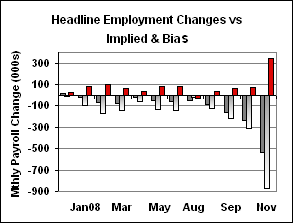
Flash Update November, 30th, 2008 • Employment Outlook Sinks
• 3rd-Qtr Gross Domestic Income Contracted Year-to-Year • Broad Money Growth Stagnant in Latest Week
Flash Update November, 23rd, 2008 • Monetary Base Annual Growth Now at 75.5%
• Systemic Solvency Crisis Intensifies Anew • Increased Nationalization of U.S. Banks Ahead?
Flash Update November, 19th, 2008 • Annual CPI Inflation Slowed to 3.7% (11.6% SGS) in October
• Inflation/Deflation Traditionally Measured in Terms of Annual Change • Industrial Production, Housing Starts Showed Deepening Downturn
Flash Update November, 7th, 2008 • Bureau of Labor Statistics Plays Post-Election Catch-Up
• October 240K Payroll Loss: 419K Loss Net of Revisions, 308K Loss Net of Concurrent Seasonal Factor Bias • Broad Unemployment Rate Highest of Current Series • Monetary Base Surge Continues: Up 48.2% Year/Year
Flash Update November, 6th, 2008 • October Employment Conditions Should Show Marked Deterioration
Flash Update October, 30th, 2008 • Gimmicked GDP Overstatement Continues, Despite Reported Contraction
• GDP Inflation Hits 18-Year High • “Recession” Dates Back to 4th-Quarter 2006
Flash Update October, 26th, 2008
 • Bank Lending Picks Up • Monetary Base Up 38.0% Year-to-Year • Near-Term U.S. Debt Default Unlikely, Unless Lenders Request Non-Dollar Issuance • Administration Signals Reporting of 3rd-Qtr GDP Contraction
Special Update October, 16th, 2008 • Inflationary Recession Remains Intact and Intensifies
• Federal Debt Jumps $1.25 Trillion Year/Year, $650 Billion in Six Weeks • Inflation Holds Despite Oil Sell-Off • 3rd-Quarter Real Retail Sales Plunge Annualized 10.1%, 4.2% Year/Year • 3rd-Quarter Industrial Production Down for Second Consecutive Quarter, Year/Year
Flash Update October, 10th, 2008 • Latest Monetary Base Jumped 16.8% Year-to-Year
• September M3 Growth Expanded Year-to-Year and Month-to-Month
Alert October, 8th, 2008 • Fed and Treasury Continue Propping the System At All Costs (Particularly Inflation)
• Intensifying Inflationary Recession Concerns Overshadowed by Systemic Risks
Alert October, 3rd, 2008 • Fed Began Sidestepping No “Bailout” Before First House Vote
• M1 and M2 Annualized Surges of 800% and 200% are Panic Distortions (Offset in M3) • Jobs Plunged by 219,000 Net of Concurrent-Seasonal-Factor Bias • “Core” Inflation Turned Higher
Alert September, 26th, 2008 • Money Supply Begins to Reflect Intensifying Solvency Crisis
• Recession Deepens Despite Still-Bogus GDP Reporting • Financial Storm Likely to Worsen, Risks Mount of Systemic Instability
Washington Journal, C-SPAN September, 25th, 2008
 John Williams talks and takes call-in questions about how misreporting of government data has contributed to the current financial crisis. John Williams talks and takes call-in questions about how misreporting of government data has contributed to the current financial crisis. Watch at the CSPAN Video Library
Alert September, 22nd, 2008 • Government Actions Will Spike Money Supply
• Highly Unlikely That the Financial Storm Has Passed • Recession Was Well Underway Before the Housing/Mortgage Crisis Broke
Alert September, 17th, 2008 • Treasury and Fed Rev Up the Currency Printing Presses
• Has a Run on the System Begun? • The Problem Remains Inflation, Not Deflation
Flash Update September, 16th, 2008 • Annual August CPI-U at 5.4% (13.2% SGS)
• Industrial Production Tumbles Like We’re in a Recession • CPI Locks in August and Annual Real Retail Sales Contractions
Alert September, 15th, 2008 • Systemic Risk Appears Intensified by Abandonment of Lehman
• Markets Face Extreme Volatility and Distortions, with Heavy Intervention
Flash Update September, 12th, 2008 • “Core” Retail Sales Down 0.1% Month-to-Month, 1.7% Year-to-Year
• PPI Absorbed Oil Selling with Minimal Annual-Inflation Impact • Trade Revisions Show Delayed Import Reporting, Suggest Downward GDP Revisions
Flash Update September, 10th, 2008 • August M3 Estimated up 14% Year-to-Year, 0.4% Month-to-Month
• Bailouts Should Intensify Inflationary Pressures • Unusual Systemic Risks
Flash Update September, 5th, 2008 • Employment/Unemployment Data Confirm Deepening Recession
• Concurrent Seasonal Factor Bias Suggests 123,000 July Jobs Loss • M3 Growth Remains Positive but Slowing
Flash Update August, 28th, 2008 • Gross Domestic Income (GDP Equivalent) Is in Formal Recession
• New Orders for Durables Goods Sank Year-to-Year
Flash Update August, 25th, 2008 • Financial Storm Continues, per Bernanke
• Pending GDP Upward Revision Surge Still Nonsense
Flash Update August, 21st, 2008 • July M3 Expanded Month-to-Month, Year-to-Year
• Inflationary Recession Continues to Intensify • Broad Outlook Unchanged
Flash Update August, 14th, 2008 • Annual CPI-U Inflation Rose to 5.6% (13.4% SGS)
• Annual CPI-W Rose to 6.2% • Real July Retail Sales Fell 0.9% Month/Month, Down 2.7% Year/Year
Flash Update August, 13th, 2008 • Real July Retail Sales Continue Monthly and Annual Contractions
• Monthly “Core” Retail Sales Down 0.33% versus 0.12% Aggregate Contraction
ALERT August, 12th, 2008 • U.S. Dollar Strength Has No Fundamental Basis Other Than Temporary War Effects
• U.S. Dollar Has Not Bottomed • Gold and Oil Prices Have Not Topped
Flash Update August, 1st, 2008 • July Payrolls Sink Year-to-Year
• Broad Unemployment Rate Surges to 10.3% from 9.9% (SGS 14.3%) • Concurrent Seasonal Factor Bias Flips
Flash Update July, 31st, 2008 • GDP Report is Political Garbage
• Lowest GDP Inflation in 10 Years Generates Strong Growth Report • Downward Revisions Put 4th-Quarter in Contraction
Flash Update July, 30th, 2008 • Systemic Instability Continues
• Durable Goods and Consumer Confidence Show No Turnaround • Pending Nonsensical GDP Growth Surge?
House Financial Services Hearing July, 28th, 2008 John Williams gave testimony before the House Financial Services Committee on July 24th.
Flash Update July, 22nd, 2008 • Special Note to Subscribers: Congressional Testimony
• Broad Money Growth Remains Inflationary • Deepening Recession Should Be Evident in Pending Payrolls, New Orders • No Recession per GDP Expectations, But …
Flash Update July, 16th, 2008 • Dire Implications for U.S. Markets, U.S. Budget Deficit
• Annual CPI-U Surges to 5.0% (SGS 12.6%) • “Core” Inflation Numbers Not Believable • Retail Sales and Industrial Production in Sharp Quarterly Contractions
Flash Update July, 15th, 2008 • “Core” June Retail Sales Fell 0.7% versus 0.1% Reported Total Gain
• Tax Rebate Benefit Evaporates • June PPI Gain of 1.8% Remained Well Shy of Reality
Flash Update July, 10th, 2008 • Spike in Annual Inflation Due Next Week
• The Problem Remains Inflation, Not Deflation • Monetary Theory and Limits of Hard Data
Flash Update July, 3rd, 2008 • June Payrolls Turned Negative Year-to-Year
• Monthly Payrolls Dropped by 147,000 Net of Concurrent Seasonal Adjustment Bias • Broadest Unemployment Rate Jumps by 0.2% • Purchasing Managers Manufacturing Index “Gain” Due to Reweightings
Flash Update June, 30th, 2008 • Abysmal Business Data Continue
• Unprecedented Plunges in Consumer Confidence Measures • Good Time for the Rest of the World to Dump the Dollar
Flash Update June, 22nd, 2008 • Industrial Production Contracts Year-to-Year
• Housing Starts in Steepest Annual Decline since Depths of 1990/1991 Recession • No Signs of Abatement in Inflationary Recession
Flash Update June, 13th, 2008 • Annual Inflation Surge Begins (4.2% BLS, 11.8% SGS-Alternate)
• Monthly Inflation Still Understated • General Outlook Unchanged
Flash Update June, 12th, 2008 • Core Retail Sales Up 0.86%
• Unusual Revisions and Seasonal Factors in Data
Flash Update June, 6th, 2008 • May Payrolls Plunged 134,000 Net of Concurrent Seasonal Adjustment Bias
• Employment and Unemployment Reports Consistent with Deepening Recession
Flash Update June, 3rd, 2008 • A Case for Manipulation of Headline Payroll Employment Numbers
Flash Update May, 29th, 2008 • First-Quarter GDI Growth Near Outright Recession
• Wall Street Spinmeisters Grasp for Straws as Business Contraction Intensifies
Flash Update May, 22nd, 2008 • U.S. Currency Now Backed by Collateralized Debt Obligations
• Seasonal Adjustments Used to Eviscerate Reported Inflation • Recession Deepens
Flash Update May, 14th, 2008 • April’s Core Retail Sales Fell 0.3%
• Thank Goodness for Seasonal Factors and Collapsing Gasoline Prices
Flash Update May, 12th, 2008 • M3 Growth Slowed in April — Still at 1971 High
• March Trade Deficit “Improvement” Not Credible
Flash Update May, 2nd, 2008 • Chances of Economic Rebound Now Are Nil
• GDP and Jobs Data Appear Rigged • Other Numbers Confirm Intensifying Inflationary Recession
Flash Update April, 23rd, 2008 • Is The First-Quarter GDP Fix In?
• Oil Prices Cannot Double Without Serious Consequences
Flash Update April, 16th, 2008 • Inflation Fantasy
• Real Retail Sales Contracted an Annualized 4.2% in First Quarter • First-Quarter GDP Contraction Locked In?
Flash Update April, 14th, 2008 • March “Core” Retail Sales Unchanged for Month, Down Year-to-Year
• Trade Data Enhance Prospects for 1st-Quarter GDP Contraction
Flash Update April, 4th, 2008 • Heavily Gimmicked Payroll Contraction Was Much Worse in Reality
• Other Key Data Also Confirm Sharply Deteriorating Inflationary Recession
Flash Update March, 30th, 2008 • Money Growth Continues Surging
• Cautions on Home Sales and Price Data • Treasury and Fed Will Accept Any Cost to Save System
Flash Update March, 24th, 2008 • It’s Not Even Close to Being Over
• Inflationary Recession and Systemic Solvency Crisis Remain • Gold Buying and Dollar Dumping Still Are Nascent
Flash Update March, 18th, 2008 • Fed Panic Continues in Pursuit of Systemic Salvation
• Inflation Understatement Used to Justify Fed Easings? • Industrial Production Plunge Could Set Second Timing-Point for Official Recession
Flash Update March, 14th, 2008 • February’s Unchanged CPI Not Credible
Flash Update March, 13th, 2008 • “Core” Retail Sales down 0.55% versus 0.56% Decline in Full Series
• Budget Deficit Surges
Flash Update March, 11th, 2008 • Solvency Crisis Deteriorates
Flash Update March, 10th, 2008 • Fed Sets Currency Printing Presses at Full Blast
• February M3 Growth at Record 16.8%
Alert March, 5th, 2008 • M3 Growth Hits All-Time High
• Hints of Systemic Unraveling Suggest Unusual Problems • Risks Mount of Non-Traditional Federal Reserve/Treasury Actions
CNN Money Interview February, 28th, 2008
 John Williams is interviewed on CNN by Greg Hunter. The record growth in M3 is discussed and its implications for future inflation. Click here or on the image to view the interview. John Williams is interviewed on CNN by Greg Hunter. The record growth in M3 is discussed and its implications for future inflation. Click here or on the image to view the interview.
Flash Update February, 28th, 2008 • Recession Will Not Contain the Inflation Problem
• Money Growth Appears to be Surging • Bernanke Remains Focused on Banking System Solvency, or Lack of Same
Flash Update February, 20th, 2008 • Monthly CPI Surge of 0.64% Masked by Seasonal Factor Revisions
• January Annual CPI Inflation at 4.28% (11.8% SGS-Alternate) • Revisions Show Stronger Inflation
Flash Update February, 16th, 2008 • Money Supply Growth Surges Anew
• Nonborrowed Reserves Plummet Further • SGS Will Continue Abandoned Government Economic Indicators Service • Financial Crises Intensify 
Flash Update February, 13th, 2008 • Real Retail Sales Continue Year-to-Year Collapse
• Core Retail Sales Up 0.11% for the Month
Flash Update February, 5th, 2008 • Mr. Bernanke Dispatches the Helicopters
• Solvency and Liquidity Problems Continue • Fed Emergency Actions Are Keeping Banking System Afloat
Flash Update January, 28th, 2008 • Outright Recession Reporting Unlikely for 4th-Quarter GDP or January Jobs
• Inflation and Dollar Concerns Ignored by Fed
Alert January, 22nd, 2008 • Fed Panic Indicates Mounting Instabilities
• Currency, Gold and Oil Market Intervention Highly Likely
Flash Update January, 19th, 2008 • Gimmicked Stimulus Cannot Reverse Structural Downturn
• Quarterly Industrial Production Contracted • Housing Starts Plunge • CPI Scuttled Annual Retail Sales
Flash Update January, 15th, 2008 • Retail Sales Revisions Show Sharper Downturn
• Inflation Irregularities Also Signal Reporting Distortions
Flash Update January, 13th, 2008 • Recession Recognition Settles In
• Moody’s Cautions on U.S. Credit Rating • December M3 Growth at 15.2%
Flash Update January, 6th, 2008 • The Tempest Intensifies
• December Payrolls Really Contracted • U.6 Unemployment Rate Surged to 8.8% • Money Growth Remains a Problem
Flash Update December, 28th, 2007 • Economic Data Take Successive Hits
• Help-Wanted Advertising Plunges to Lowest Level Ever
Flash Update December, 18th, 2007 • Actual 2007 U.S. Federal Deficit at $1.2 Trillion, $5-Plus Trillion on Consistent Basis
Flash Update December, 15th, 2007 • Annual CPI Inflation at 4.3% (SGS-Alternate CPI 11.7%), PPI at 7.2%
• Industrial Production Suggests Fourth-Quarter Contraction
Flash Update December, 13th, 2007 • November “Core” Retail Sales Gained 0.78% versus 1.22% Non-Core
• Prior Food and Energy Inflation Revised Higher
Flash Update December, 7th, 2007 • Gimmicks Mask November Payroll Contraction
• SGS-Ongoing M3 Annual Growth Rises Again in November • Official CPI Annual Inflation Could Break 4% Next Week • Fed’s Quandary Remains
Flash Update December, 2nd, 2007 • What Is Scaring The Fed?
• GDP Numbers Are Utter Nonsense • Other Data Show Tumbling Economy
Flash Update November, 19th, 2007 • Annual Inflation Surge Should Continue
• Inflation-Adjusted (SGS)Peak Gold Price Is $6,030
Flash Update November, 14th, 2007 • October "Core" Retail Sales Unchanged
• Data Massaging Gets Worse as Energy Prices Collapse(?)
Flash Update November, 9th, 2007 • October M3 Growth Breaks to New 36-year High
• Trade Numbers Again Appear Massaged • Beware Next Week's Surge in Annual Inflation! • The System Begins to Crack
Flash Update November, 2nd, 2007 • Data Appear Massaged as Market Manipulation Tool
• October Payrolls Fortuitously Show No Need for Further Easing • Household Employment Plunges by 250,000
Flash Update October, 31st, 2007 • Fed Action Likely Foreshadows Jobs Report
• GDP Report Fundamentally Was Nonsense
Flash Update October, 21st, 2007 • Watch the Greenback!
Flash Update October, 17th, 2007 • Annual CPI Jumps to 2.8% in September
Flash Update October, 14th, 2007 • Gimmicked Data Appear Aimed at Reducing Pressures on Fed for Another Easing
• September M3 Annual Growth Hit 14.7% • Watch Out for CPI Annual Inflation Surge! • Twenty years ago this coming week, a new Federal Reserve Chairman faced a financial panic that included the worst one-day stock market crash ever seen in the U.S. markets. Alan Greenspan had become the U.S. central banker in August of 1987, raised rates in September in an effort to bolster the flailing U.S. dollar, and the markets crashed in October. The crash was due to an extraordinary confluence of factors, some of which were of Mr. Greenspan's making, some of which were of Treasury Secretary James Baker's making, and some of which came to a head after festering for decades. Whatever one may think of the former Fed chairman, his actions following the panic did help to contain it and likely side-stepped a total financial-market meltdown, at that time. As will be discussed in greater detail in the upcoming October SGS, those same actions, however, also underlie and ultimately set-up the even greater crisis faced by current Fed Chairman Ben Bernanke. The roiling of the U.S. dollar market following the Fed's recent easing is why the Fed now likely will try to avoid further interest rate cuts. At risk is the financial-market meltdown that Alan Greenspan carried for so long in his nightmares. The liquidity crisis still is unfolding, the economy remains in a deteriorating inflationary recession, and the Fed has few if any viable options open to it. One tool remaining in the Fed's and Administration's arsenal of financial market manipulating gadgets, however, is the rigging of key economic reporting. It was used back in 1987; it appears to be in play, today.
Flash Update October, 7th, 2007 • Market Mania Fueled by Data Touts
• M3 Annual Growth Highest Since November 1971
Flash Update October, 5th, 2007 • September Jobs Data Cannot Be Believed
• September M3 Annual Growth Likely to Top 14.5%
Flash Update September, 17th, 2007 • Inflationary Recession Deepens
• System is as Vulnerable as at Any Time Since 1929 to 1933
Flash Update September, 9th, 2007 • Consistently-Adjusted August Payrolls Plunged 82,000
• Annual M3 Growth Hit 14% in August • Inflationary Recession Still Befuddles a Fed Set to Ease • Recession Recognition Gains Political Correctness • When the popular media and consensus economists start talking recession, usually an economic downturn already has been underway for a year or so. The 2000 recession gained rapid recognition following 9-11, but the terrorist attacks did not trigger the downturn. The recession had been in place for over a year; the attacks only deepened an ongoing contraction. In like manner, the current recession has been underway for well over a year, but it was not triggered by the liquidity crisis that erupted in August, only intensified by it. The impact of the liquidity problems still will not show up in most economic data until next month. The exceedingly weak August payroll survey was conducted before the crisis had much impact. What appears to have happened was that someone in the Administration decided to recognize the recession and released weak numbers either to force or to help accommodate the Fed in justifying an imminent easing. Yet, there also is a worsening inflation problem, with high oil and food prices, a weakening U.S. dollar and exploding money supply growth. And, then, there also is the threat of U.S. dollar dumping with the U.S. financial markets dependent on foreign capital for liquidity.
Alert September, 6th, 2007 • Money Supply Growth Explodes
Flash Update September, 2nd, 2007 • Systemic Liquefaction Boosts M3 Growth to 34-Year High
• Ongoing Extreme Income Variance Reported for 2006 • Financial System Remains Highly Unstable • Chairman Bernanke Keeps Tap Dancing on That (Dollar) Landmine • The liquidity crisis continues, and the financial system is groaning under the strain. In the weeks ended August 15th, 22nd and 29th, respectively, seasonally-adjusted (unadjusted is little different) commercial paper outstanding plunged by $91 billion, $90 billion and $63 billion. As other Federal Reserve reporting starts covering the crisis period, key data are showing some impact of Fed actions. For example, seasonally-unadjusted discount window borrowings by banks, following the Fed's heavily touted discount window actions, jumped from a daily average of $6 million in the two weeks ended August 15th, to $1.301 billion in the two weeks ended August 29th. M2 jumped a seasonally-adjusted $43.6 billion in first reporting of the week ended August 20th, up at an annualized growth rate of 36.4%. That, combined with sharp increases in non-M2 components of M3, indicates a spike in annual growth for the SGS-Ongoing M3 August measure, discussed below. Also, the Fed still seems to be enforcing an informal 25-basis-point cut in the fed funds rate, per the accompanying graph. On the recession front, the phony 4.0% GDP growth was reported as expected. At the same time, help-wanted advertising — a much more reliable economic indicator — plunged to a 49-year low. Through all this, the U.S. dollar remained relatively stable last week. Such tranquility should prove short-lived.
Alert August, 26th, 2007 • Effective Fed Funds Target is 4.75%
•5.00% • Bernanke's Tactics Not Working Well • Financial Tempest's Eye Wall Stalls Temporarily Shy of Landfall • Rigged Data Provide Inexpensive Market Intervention • Fed Chairman Bernanke's efforts to stabilize the U.S. financial system have met with minimal success that should prove short-lived. On the plus side has been temporary relative stability in the equity market, aided by extraordinary jawboning and data manipulation, along with market manipulations of the Working Group on Financial Markets (a.k.a. the Plunge Protection Team) as indicated by Treasury Secretary Paulson. On the downside, the liquidity crisis appears not to be contained. Obviously planted stories in the financial media have touted the Fed's "clever" new approach to liquidity crisis management and how it addresses "moral hazard." Having the Fed address moral hazard in the financial markets is like having a whorehouse madam lecture her girls on the virtues of virginity. Moral hazard is not a primary concern to the Fed when the system is at risk. The planted stories also explain how there is no need to cut the targeted Fed Funds rate. While there are good reasons not to cut the Fed Funds rate, suggesting it will not happen is ludicrous when the Fed already has done it, as shown below. The Fed Funds shell game is aimed at balancing the needs of short-term Wall Street hype, deemed necessary to goose the stock market, against an extremely serious need to prevent a massive U.S. dollar sell-off. With the economy in an inflationary recession, with the greenback showing new cracks in the last several days, and with the stock market just a month away from squirrelly season, the negative turmoil in the financial markets hardly has begun.
Alert August, 12th, 2007 • Systemic Liquidity Problems Turn Ugly
• Communist China Fires First Dollar Salvo • Given Deepening Recession, Financial Market Woes Are Just Beginning • July M3 Growth Holds at 13% • Last week saw extraordinary developments, with a widening systemic liquidity crisis forcing central banks to reaffirm their statuses as lenders of last resort. At the same time, Communist China fired its first serious salvo against U.S. financial market dependence on foreign capital, and Washington appears to have capitulated to early demands. With the U.S. economy in a deteriorating, inflationary recession, and with Mr. Bernanke possibly facing his two other worst nightmares at the same time, one can make the case that the negative turmoil in the U.S. financial markets and for the U.S. dollar are just beginning.
Flash Update August, 5th, 2007 • July Jobs Report Shows Managed Numbers
• July Annual M3 Growth Notches Lower to 12.8% • July Financial-Weighted Dollar at All-Time Low • Systemic Problems Begin to Surface • Last week saw mounting financial-market stress as an increasing number of firms indicated losses from or difficulties with mortgage- and asset-backed securities and collateralized-debt obligations. Circumstances are exacerbated by an intensifying inflationary recession, and market disorders should get much worse. It would not be surprising if the Fed found itself being called upon, or felt the need, to provide some systemic liquefaction. Still missing from the unfolding crisis, however, remains heavy flight from the U.S. dollar, which will come sooner rather than later. So far, flight to safety and quality has been into the dollar and into Treasury securities, but that will become a flight out of the greenback, particularly if the Fed moves to liquefy the system. Then, pressures on the U.S. central bank will shift heavily in favor of raising interest rates to defend the dollar. On the economic front, last week's data showed not only weakening business conditions, but also indications of data manipulation in the payroll survey.
Alert July, 29th, 2007 • Reported GDP Rebound was Politically Convenient
• 2nd-Quarter GDP Contracted 0.9% Net of Revisions • Signs of Imploding Economy Mount • Oil Price a Penny Shy of Record • Stock Market Swoon Foreshadows Much Worse • The U.S. financial markets will face massive and possibly panicked sell-offs in stocks, bonds and the U.S dollar, along with an explosive rally in the price of gold. Timing remains the issue, but this week's break in stock-market psychology has moved the odds strongly and solidly in favor of looming market meltdowns within a six-to-nine month horizon. Circumstances remain fluid enough, though, that given the right confluence of negative factors — as discussed below — the markets could spiral into the abyss at anytime, including within the next week or so. Faced with short-term financial-market and political pummeling, President George Bush sought a breather with the second-quarter GDP numbers. He and his spinmeisters boasted of U.S. economic growth rebounding to 3.4%, from the first quarter's 0.6%, but the improved numbers were just figments of the imaginations of officials at the Bureau of Economic Analysis. Other reporting showed rapidly deteriorating business activity, while inflation prospects took a new blow.
Flash Update July, 11th, 2007 • Revision and Seasonal-Adjustment Games Help Obfuscate Employment Reality
• Consistent Seasonals Suggest 107,000 June Jobs Gain (Not 132,000) • To maintain the reported 2,000,000 (exact) annual jobs growth in place for revised seasonally-adjusted May 2007 payrolls, monthly jobs gain reporting needs to be targeted by the Bush Administration at 167,000 per month. In contrast, the Clinton Administration targeted 250,000 per month (3,000,000 per year) for an extended period of time. Perhaps for fear of rattling the credit markets, however, initial monthly reporting typically has been "understated" over the last year or so, followed in subsequent months by major upward revisions to prior reporting. If this pattern is not a machination of the Bureau of Labor Statistics (BLS), and if the later numbers are accurate, not fabrications, the BLS would do well to suspend its initial reporting of these numbers, rather than to continue misleading the public and the markets with such poor quality reporting.
Flash Update July, 1st, 2007 • Recession Signals Deepen as Inflation Pressures Mount
• Help-Wanted Advertising Falls to New Cycle and 50-Year Lows • May's help-wanted advertising index plummeted to 27, from 29 in April, hitting new cycle and 50-year lows. After allowing for the Internet's siphoning meaningful volume away from the print media, the renewed plunge in the current data still signals a sharp weakening in current economic activity and could be a harbinger of weaker-than-expected June employment data due for release on July 6th. There were no happy surprises in other economic releases last week. On the price front, ongoing M3 annual growth for June looks like it was close to matching May's pace, while oil prices moved higher, again, and the Fed fretted a little more openly about its inflation worries.
Flash Update June, 26th, 2007 • Last Month's Unusual Housing "Surge" Evaporates
• Fed Remains Hamstrung Despite Mounting Dollar and Systemic Liquidity Risks • Sporadic and irregular "positive" economic reports of the last month are proving fleeting, as I suggested, with some numbers revising sharply to the weak side. The housing numbers, for example, look again like they are in the middle of deepening recession.
Flash Update June, 17th, 2007 • Alternate CPI Notches up to 10.3% Annual Inflation
• May M3 Annual Growth at 13.3% • Industrial Production Falters, Retail Sales Get Seasonal-Factor Boost • Inflationary Recession Deteriorates Anew • With May CPI and PPI topping expectations, and with industrial production faltering, the combination of inflation and recession — a disquieting concept for the financial markets — is not about to disappear. Inflation factors appear to have been rattling the credit markets recently, but the rise in long-term U.S. rates likely reflects more of a waning foreign enthusiasm for buying U.S. Treasuries, than it does expectations of a pending U.S. economic boom. Any such expectations should disappear with economic reporting in the month or two ahead.
Flash Update May, 28th, 2007 • Housing and Durable Goods Consistent with Faltering Economy
• Downside Data Likely in Week Ahead • Wall Street Hypesters Fan False Hopes of Economic Turn • On Thursday, regularly-volatile new home sales were reported up 16.2% for the month of April, and Wall Street’s spinmeisters went to town. The hypesters who tried to weave that isolated and volatile number into a housing recovery story would be comfortable working for the propaganda ministry of the average totalitarian state.
Flash Update May, 20th, 2007 • Alternate CPI Holds at 10.2% Annual Inflation
• Industrial Production and Housing Data Show Faltering Economy • Annualized Year-to-Date CPI Shows Serious Inflation • There was little startling in last week's economic reporting, net of some major revisions and usual seasonal-factor distortions. The inflationary recession continues, and data in the weeks ahead should confirm ongoing deterioration.
Flash Update May, 12th, 2007 • Annual M3 Growth Accelerates to 12.8%
• Retail Sales and Trade Deficit Take Hits, as PPI Booms • Fed Hints at Inflationary Recession • Comments from the U.S. central bank usually are couched in such cautious and careful language as to make a Wall Street attorney blush. Removing the regular platitudes as to likely economic expansion and inflation moderation in the coming quarters, the crux of the May 9th FOMC statement went: "Economic growth slowed in the first part of this year and the adjustment in the housing sector is ongoing. … the Committee's predominant policy concern remains the risk that inflation will fail to moderate as expected." That is as close as the Fed will get to acknowledging a recessionary inflation, until well after the fact of broad market recognition. Last week's economic reporting further moved market expectations towards the unthinkable combination of a contracting economy beset by high inflation.
Flash Update April, 29th, 2007 • Key Dollar Measure Hits All-Time Low
• First-Quarter GDP Growth of 1.26%, GDP Deflator at 3.97% • Business Activity Tumbles as M3 Growth and Inflation Fears Soar • Inflationary Recession Can Trigger Massive Dollar Selling • The trade-weighted U.S. dollar hit a record low last week, as the markets increasingly recognized the downturn in economic activity, in conjunction with rising inflation that the Fed seems to be "fighting" with accelerating broad money growth. The faltering fundamentals for the greenback included the ongoing bottom-bouncing of the President's approval rating. The U.S. currency is at the precipice and shortly could come under massive selling pressure. Dollar dumping would create turmoil in the domestic U.S. markets, pressuring long-term interest rates to the upside and equity prices to the downside. Never before have the U.S. markets faced an economic crisis while being so heavily dependent on foreign capital for liquidity.
Flash Update April, 22nd, 2007 • Annual Inflation Soars as Economic Indicators Continue to Tank
• With Deepening Inflationary Recession, Weakening Dollar and Strengthening Gold, Equities Boom? • Leave it to Wall Street's perverted spinmeistering to hype a 0.4% surge in annual CPI inflation as good news. The hype, of course, surrounded a reported 0.2% decline in so-called "core" inflation, which is relevant only to those poor souls living in the gray twilight of existence, where they consume neither food nor energy. Nonetheless, combined with ongoing weak economic data, general selling pressure against the U.S. dollar and upside movement in the price of gold, the happy inflation hype has been enough to push the Dow Jones Industrial Average to new highs. While the trends in weakening data and U.S. dollar and strengthening gold will tend to intensify, mounting irrationality in equities trading has set up stocks to be turned on their heads.
Flash Alert April, 3rd, 2007 • Inflationary Recession Continues to Deepen
• Retail Sales Running About 0.8% Lower in Revision • Negligible "Final" GDP Revision Indicates Pending Major Downside Annual Revision • March Jobs Data Should be Soft • The inflationary recession continues to deepen, with economic reporting generally surprising markets on the downside of expectations and inflation surprising markets on the upside. Last week, Fed Chairman Bernanke felt it necessary to clarify that the Fed still has a problem with inflation, despite slowing business activity. Inflation concerns have not been helped by mounting tensions in the Middle East or by rising oil and gasoline prices.
Flash Update March, 27th, 2007 • Major Revisions to Housing, Retail Sales and Production Promise Lower GDP Growth
• Where the annualized quarterly fourth-quarter GDP inflation-adjusted growth rate revised from 3.5% in its "advance" reporting, to 2.2% in its "preliminary" reporting, further downward revision is likely in Thursday's "final" reporting, due to significant revisions in underlying economic series.
Flash Update March, 18th, 2007 • Resurging Inflation Again Sinks Real Retail Sales
• Inflationary Recession Intensifies • Last week's CPI, PPI, retail sales and industrial production releases added some new detail to the continuing deterioration in current economic and inflation conditions. Indeed, as the markets may be beginning to understand, a weak economy and rising inflation can happen together.
Flash Update March, 11th, 2007 • Likely Reality in Troubled Economic Data: February Payrolls Contracted; January Trade Deficit Did Not Shrink
• February M3 Annual Growth at 10.9% • Data-Quality Deterioration Deepens • With financial-market speculation moving back to a "recession or growth" focus, poor-quality reporting of heavily followed economic data does a disservice to the investing public. This is particularly true when Wall Street hypesters weave related stories that have little relationship to reality, but that happen to help sell certain financial products. The government would do well to delay its publication schedule by a full month for key economic data that usually suffer heavy revision. In the trade-off between quality and timeliness of reporting, little would be lost, since first estimates of the payroll and GDP data, for example, usually are worthless.
Flash Update March, 4th, 2007 • Recession Continues to Barrel Along
• Market Disquiet Mounts As "Nesting Season" Nears • Deepening Recession Helps Trigger Greenspan Waffle and Market Wobble • When consensus economic forecasters start to talk of recession, usually a downturn has become a certainty, with economic activity already having contracted for at least six-months to a year. Wall Street economists, and Administration and Federal Reserve officials, typically are the last to talk of the politically unthinkable, for fear of negative reactions they might trigger in the financial markets. The game is afoot.
Flash Update February, 4th, 2007 • M3 Growth Hits 11%, December Jobs Revised Upward by 933,000
• The SGS Alternate Data pages have been updated for M3, GDP and the U.S. Dollar. Based on three weeks of reporting through January 22nd, annual M3 growth hit 11.0% in January, helped by rising M2 growth.
Flash Update January, 31st, 2007 • GDP overstated by bogus trade reporting
• Upside risk to Janurary jobs report • Details on upcoming Newsletter.
Flash Update January, 21st, 2007 • Weather Distorts Data
• 4th-Quarter Production Contracts • Annual Alternate Inflation at 25-Year High • M3 Growth Continues to Accelerate • December’s unusual weather patterns appear to have distorted monthly growth to the upside not only for payrolls — touched upon in the prior Flash Update — but also for retail sales, industrial production and housing starts. Actual economic activity does not turn quickly or sharply without advance indications. Continued distortions are likely, with the data swinging back the other way in the next couple of months. That said, the inflationary recession has continued to deteriorate.
Flash Update January, 7th, 2007 • December Payroll Growth Understated But Not Credible
• Unusual Weather Patterns Promise Major Data Distortions • Is Bureau of Labor Statistics Playing Games with the Credit Market? • Highly unusual reporting and revision patterns for the jobs data were seen again, for December. Employment conditions are close to showing a recession, but each month the Bureau of Labor Statistics keeps filling in prior periods with levels of upside revisions that are unprecedented outside of the annual benchmark revisions. The revisions are unusual enough for the BLS to have published a statement last month proclaiming that the changes were not unprecedented. Something very strange is going on in the reporting.
Flash Update December, 30th, 2006 • New Year Faces Financial Peril
•Year-End Newsletter by January 2nd •Accelerating growth in the formerly broadest of U.S. monetary aggregates (M3) offers a hint of what will be one of the major, ongoing market concerns in 2007: inflation. The other key economic features of the year ahead will be a deepening, structural recession, and a U.S. government fiscal disaster careening out of control. Where 2006 closed out the year with higher equity prices and somewhat higher interest rates, it also saw a significant surge in the price of gold and the early stages of a major weakening of U.S. dollar. The U.S. equity and credit face bleak prospects in 2007, with strong upside potential for gold and a massive downside potential for the U.S. dollar.
Alert December, 16th, 2006 • 2006 GAAP-Based Federal Deficit Jumps to $4.6 Trillion
• Total Federal Obligations at $54.6 Trillion • Energy Pricing Gimmicks Distort CPI and Trade Deficit • Last week’s U.S. Treasury’s 2006 GAAP-based federal deficit deteriorated sharply, well beyond any possible chance of containment. Other government reports showed curious understatements of both the CPI and trade deficit, as the ongoing inflationary recession continued to unfold.
Flash Update December, 11th, 2006 • M3 Growth Tops 10%
• Inflation Signals Turn Higher Again • First Post-Election Jobs Data Show Slowing Economy • Economic releases of the last week or so continued showing a rapidly deepening recession, along with early confirmation of inflation resuming its upward trend. Beyond ongoing softness in the dollar and some upside movement in oil prices threatening inflation, broad money supply growth is accelerating to the upside.
Flash Update November, 20th, 2006 • Exaggerated Gas Price Drop Pushes Inflation Reporting to Nadir
• M3 Growth Hits Four-Year High • Economic Activity Continues to Crumble • Post-Election Environment Set for Rebounding Inflation and Deepening Recession • The inflationary recession is picking up momentum. The various special factors that have depressed near-term inflation reporting have run their course, while economic data ranging from retail sales to housing continue to signal plummeting economic activity. Such is not a happy environment for the traditional financial markets.
Flash Update November, 6th, 2006 • October Jobs Data Appear Rigged
• Unemployment Drop Statistically Indistinguishable from Increase • Jobs Gain Statistically Indistinguishable from Decline • With continued Republican control of both the House and the Senate at risk, the Bush Administration had both the motive and the opportunity to manipulate the October labor report in its favor. Beyond the reported gain in jobs and drop in unemployment being statistically indistinguishable from a drop in jobs and a gain in unemployment, were the data rigged? While there is no smoking gun, a strong odor of cordite permeates the air. The level of pre-orchestrated hype and a wide variety of unusual reporting characteristics in the October labor data argue strongly in favor of manipulation.
Flash Update October, 16th, 2006 • Observations on Trade, Budget and Retail Sales Data — Un-hyped
• Give Wall Street a bad number, and a positive spin will be generated. Contrary to the popular financial-media hype last week, the news on the trade deficit, the budget deficit and retail sales could not have been much worse. If you like the "core inflation concept," you will love the "core trade deficit" and "core retail sales."
Flash Update October, 9th, 2006 • Political Manipulation of Labor Data Kicks into High Gear
•September Payrolls Fell 40,000 Using Consistent Seasonal Adjustments • The broad outlook for a deepening inflationary recession remains in place. The September employment report showed severe deterioration, despite a number of reporting gimmicks. Faced with an electorate that is in economic pain, the Bush Administration has tried to make the bad numbers disappear for a while, but results have been mixed. This is despite the comparative annual boosts starting to show up in data from the effects of last year’s terrible hurricane season. The heavily touted annual gain in September retail stores sales is a prime example of such an effect.
Flash Update September, 5th, 2006 • Recession Surfaces Despite Manipulation of GDP Data
• Help-Wanted Advertising and Consumer Confidence Plunge Anew • Poverty Survey Suggests the 2001 Recession Never Ended • While Wall Street tries to spin a soft-landing tale for the economy — thanking Mr. Bernanke’s genius — a number of reports already are showing scattered wreckage from the crash landing.
Flash Update August, 7th, 2006 • The employment data arebeginning to act recession-like, and that normally would put the Fed into aneasing mode. Yet, as evidence grows of slowing
•falling economic activity,evidence of accelerating inflation is mounting, too. There is little thecentral bank can do to contain inflation or to stimulate the economy.Accordingly, Fed considerations and activity will be dominated by efforts tomaintain stability in the financial markets and the U.S. dollar.
Alert July, 28th, 2006 • GDP Manipulation Uncovered — Instead of the 2.5% growth reported for second-quarter 2006 GDP, the economy contracted. Growth fell by more than 0.5% when corrected for unusual inflation gimmicks used to understate GDP deflation. Previously reported GDP growth underwent meaningful downward revisions.
Flash Update July, 24th, 2006 • Housing, Retail and CPI Data Confirm Recession Signals.Two key series — Retail Sales and Housing Starts — have generated solid recession warning signals, based on reports published last week. This is as anticipated in the July 17th newsletter. Once generated, such signals always have been followed by the signaled contracting or booming economy.
Alert June, 12th, 2006 • The reporting of March’s sharp trade improvement appears to have been a deliberate fabrication, aimed at salving the troubled financial markets of the time! Benchmark revisions released along with the monthly April trade data show that the sharp "improvement" in the March trade deficit — reported at a time of high U.S. dollar and political stress — was rigged. While it is standard practice by the statistical agencies to adjust pre-benchmark revision reporting to coincide with the benchmarks, such adjustments are made to month-to-month or quarter-to-quarter changes, not to the absolute level. To my knowledge, pre-adjusting the level of a series such as the trade deficit is unprecedented. The Bureau of Economic Analysis (BEA) is more politicized than the Census Bureau. The BEA now "participates" in the trade release with Census, which once handled the monthly number exclusively. Violating common reporting principles with the trade data, the BEA likely repeated the process in the GDP reporting.
Alert July, 15th, 2005 • Yesterday morning’s report of 0.0% consumer price inflation (both seasonally adjusted and unadjusted) during June appears to have been a political fabrication. It was accomplished through the manipulation of reported energy prices. As a result of no reported inflation for the month, "official" annual CPI inflation dipped from 2.8% in May, to 2.5% in June.
Federal Deficit Reality: An Update July, 7th, 2005 • From time to time, the U.S. financial markets manifest some concern about the nation’s twin deficits — the federal budget and the current account shortfalls. These episodes have been short-lived, however. Generally, the markets have been very sanguine about these problems — much too sanguine, in our view! We believe there is a great deal about which to be concerned in both areas, and that longer run, the U.S. markets will indeed reflect it — negatively, of course. This article updates our thoughts, etc. on the federal budget deficit.
Alert December, 16th, 2004 • Treasury reports $11.1 trillion 2004 GAAP-basis deficit, which was equal to 96% of GDP; inflation pressures will intensify.
|
This material is provided under the ShadowStats.com Terms of Use. Use of this material constitutes agreement to those terms.
Privacy Policy | Contact Us
Copyright 2003-2022. Shadow Government Statistics, Walter J. Williams.
Privacy Policy | Contact Us
Copyright 2003-2022. Shadow Government Statistics, Walter J. Williams.